Sonus Maris // Music Performance
A special Earth Day event!
L'art c'est la science faite chair
Art is science embodied
These words by the French poet Jean Cocteau, written in 1918, encapsulate a perspective in which art and science are imagined as two expressions, as two voices of the same spirit of enquiry, delivered in different registers.
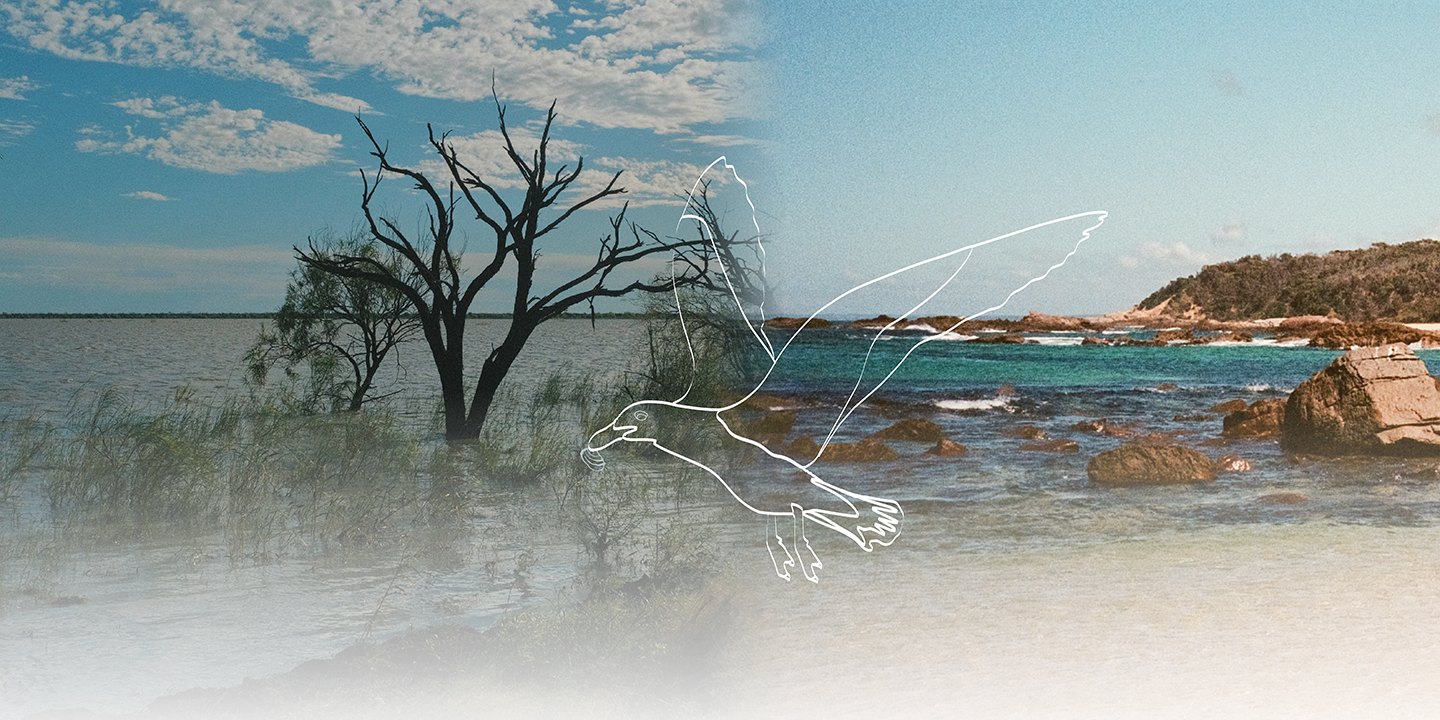
In Sonus Maris, the New Music Collective, led by internationally acclaimed pianist Dr Sonya Lifschitz, reimagine and reinterpret a sonic score by Dr Nigel Helyer, which in turn is a translation of data out of the UNSW Water Research Laboratory (WRL). The ensemble - with contributions from UNSW alumni Tomas Ford and Harry Collins - presents an experiential articulation of the climate emergency as told through the ebbs and flows of our waterways.
Working in close partnership with WRL postdoctoral researcher Dr. Tino Heimhuber, Helyer employs audio-visual media to reinterpret data charting the unique dynamics of intermittently closed and open lakes and lagoons (ICOLLs). ICOLLs are the most prominent type of estuaries found on the NSW coastline and are unique in that they alternate between open and closed oceanic entrance conditions, driven by the dynamic interplay between oceanic and land-based forces.
Through data archaeology and a novel algorithm, Heimhuber extracts valuable information from a three-decade archive of public satellite imagery, drawing attention to long-term morphological and eco-hydrological variations in these crucial sites. Helyer interprets this detail-rich source material to compose a musical score translating the changeability of ICOLLs as a multisensory experience.
Helyer's experimental music invites audiences to rethink knowledge systems by seeing, feeling, and hearing the flows and patterns of coastal environments. Art brings science into the visceral world as a palpable experience, and by doing so it can become something that we can relate to directly—a narrative behind the data!
The Sonus Maris project has created three principal outcomes, initially a video presentation at the International Conference on Coastal Engineering (December 2022 at the Sydney International Conference Centre), followed by an exhibition (currently on display at the UNSW Library Exhibition Space) and finally as this collaboration with the UNSW New Music Collective.
This third stage of development takes the original four scores the artist created from the Satellite data, as well as the text accompanying the scores, re-working them in a variety of experimental musical forms, from notated musical cells derived from the data, to an improvised interpretation of an animated graphic score. Released from the necessity of directly translating numerical data points into musical pitch the New Music Collective is free to reinterpret the structural patterns of hydro-dynamic and geo-morphical changes in the coastal environments and invoke the the semi-chaotic patterns of climate.
Sonus Maris will be bookended by the Sydney premiere of two new compositions for piano, video and recorded voices by Brisbane-based composer Robert Davidson, drawing on voices by two of world's most powerful advocates for the environment - Rachel Carson and Greta Thunberg.
The event will also see the relaunch of the Wave Organ - a piece of engineering ingenuity created by UNSW alumni Patrick O'Dwyer - which you, the audience, are invited to play!
Read more about the Sonus Maris project on Nigel Helyer's website.
___
Performers
Tomas Ford – Bass
Natalie Liu – Violin
Kit Spencer – Voice
Jenni Murphy – Voice
Xinghan Feng – Clarinet
Emma Korell – Saxophone
Sahil Mahbubani – Saxophone
Sonya Lifschitz – Ensemble Director, Piano
Production
Mark Mitchell – Production Manager
Sarah Stormont – Stage Manager
Visit the Sonus Maris exhibition at UNSW Library.