Australia Ensemble Concert 2 2026

In a program of four trios we hear Beethoven’s greatest Piano Trio, the Archduke, written at the end of his ‘heroic’ period. It has the amplitude, variety and formal elaboration of works such as the Seventh Symphony; it is crowned by a slow movement that is one Beethoven’s most extraordinary variation-sets.
Brahms’s late-period Trio is an affectionate tribute to ‘Fräulein Klarinette’, the instrument played by his friend Richard Mühlfeld. Brahms blends the golden tones of the melody instruments so seamlessly that one contemporary said it sounded like they were in love.
Love and grief, comfort and healing inspired Latvian composer Pēteris Vasks’s Lonely Angel, an open-hearted work of searingly beautiful melody and ultimate serenity, arranged by the composer for piano trio.
By contrast, Australian composer Harry Sdraulig’s Hat-Trick – in a brand-new version including clarinet – is a brightly energetic work, though not without moments of introspection, that celebrates the teamwork and brilliance of the players for whom it was written.
SDRAULIG Hat-Trick [2020]
VASKS Lonely Angel (Vientuļais eņģelis) [1999 (2006)]
BRAHMS Clarinet Trio Op.114 [1891]
BEETHOVEN Archduke Trio [1811]
David Griffiths, clarinet; Dimity Hall, violin; Julian Smiles, cello; with guest artists, Andrew Barnes, bassoon; Joshua Batty, flute; Daniel de Borah, piano
Single tickets
Prices
Adult $58 | Senior $44 | Concession $35
(All tickets are subject to booking fees.)
To enquire, please email us at australia.ensemble@unsw.edu.au or phone 02 9385 4874.
Box office hours are Tuesday & Thursday (10am-4pm).
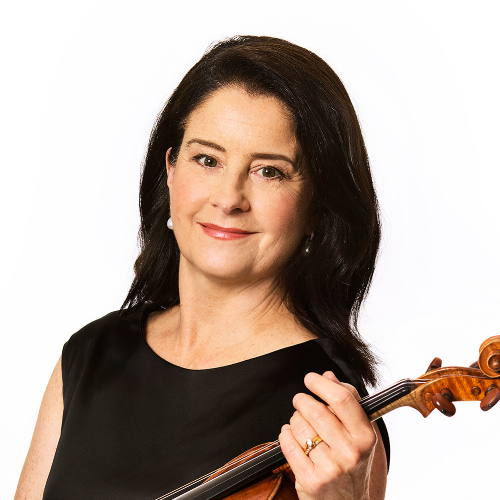
Dimity Hall
ViolinDimity Hall is well known to national and international audiences, primarily as an outstanding chamber musician - a founding member of the Goldner String Quartet (whose distinguished 30 year career concluded in late 2024 with all founding members intact) and with the Australia Ensemble UNSW, which created an additional core membership for her in 1992, after 6 years as a regular associate. With both ensembles she has performed, toured and recorded extensively, to critical acclaim.
Dimity made her solo debut with the Sydney Symphony in 2002 performing Vaughan Williams’ The Lark Ascending, later recording the work for ABC Classics. Her recording remains one of the most frequently broadcast versions in Australia. She has also been soloist with the Australian Chamber Orchestra, Canberra Symphony Orchestra and Brisbane's Camerata, amongst others. More recent solo performances include the Brahms Double Concerto (with Julian Smiles) and the Beethoven Triple Concerto (together with Julian and pianist Piers Lane) with orchestras in Canberra and Sydney.
After graduating from Bachelor of Music studies with acclaimed pedagogue Alice Waten at the Sydney Conservatorium, Dimity undertook postgraduate studies with renowned violinist Herman Krebbers in Amsterdam, on a Netherlands Government Scholarship.
There she won the Concertgebouw's coveted Zilveren Vriendenkrans Award for young soloists. She performed in recitals and as a casual member of the Royal Concertgebouw Orchestra for concert tours and recordings.
Formerly Principal Second Violin of the Australian Chamber Orchestra, she has also appeared with them as guest Leader and with the Sydney Symphony as guest Principal. Dimity has performed as a member of the Australian World Orchestra and as guest Concertmaster for the Australian Opera and the Adelaide and Melbourne Symphony Orchestras.
Dimity was a juror for the 2003 Melbourne International Chamber Music Competition, and has coached young chamber musicians for Musica Viva, the Sydney Conservatorium, ANAM and the Australian and Sydney Youth Orchestras. From 2008-2016 Dimity combined with semi-finalists in their chamber music performances as part of the Sydney International Piano Competition. In 2017 she, together with husband Julian Smiles, performed for James Crabb’s ‘Ukaria 24’ festival where they also worked alongside the AYO Momentum ensemble. In 2019, Dimity and Julian were resident artists for the Queensland Conservatorium’s Side by Side program: coaching individual string players, chamber music ensembles and leading a chamber orchestra of staff and students.
Regular festival appearances have included the Australian Festival of Chamber Music, Huntington Estate Music Festival, Musica Viva Festival, Music in the Hunter and the Blackheath Chamber Music Festival, to name just a few.
Dimity plays a Nicolo Gagliano violin, kindly on long-term loan from the Olding family.
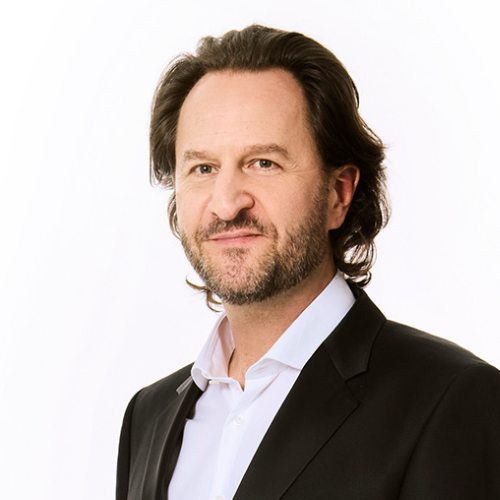
David Griffiths
ClarinetDavid Griffiths is a member of two of Australia’s leading chamber music ensembles, the Australia Ensemble UNSW and Ensemble Liaison. He also holds the position of Associate Professor of Music (Clarinet) and Coordinator of Chamber Music at the Melbourne Conservatorium of Music, the University of Melbourne. A passionate educator and performer, he has presented masterclasses and performances in Asia, Europe, United States, the Middle East and Australia including a critically acclaimed debut in Carnegie Hall’s Weill Recital Hall. As a soloist he has appeared with the Melbourne Chamber Orchestra, Tasmanian Symphony Orchestra, Sydney Symphony Orchestra, Orchestra Victoria, Australia Ensemble UNSW, Shanghai Radio Orchestra, Macau Orchestra and the Monash Academy Orchestra. As a member of Ensemble Liaison, he curates and performs an annual three-concert series at the Elisabeth Murdoch Hall at the Melbourne Recital Centre which is currently in its 16th season. He has also performed with the New Zealand, Goldner, Tinalley, Acacia, Flinders and Australian String Quartets, the New York Wind Soloists, and the Southern Cross Soloists. He has collaborated with many leading artists including Nemanja Radulović, Ray Chen, Anthony Marwood, Henning Kraggerud, Emma Matthews, Cheryl Barker, Peter Coleman-Wright, David Jones, Paul Grabowsky, Tony Gould, and has appeared at the Australian Festival of Chamber Music in Townsville, Port Fairy Festival, Lucerne Festival and the Pacific Music Festival in Sapporo, Japan.
He has held positions as Associate Principal Clarinet with the Melbourne Symphony Orchestra, Principal Clarinet of the Macau Orchestra and Principal Clarinet of the Shanghai Radio Orchestra. He has appeared as Guest Principal clarinet with all of Australia’s major symphony and opera ballet orchestras along with the Australian Chamber Orchestra. He was also Co-Principal of the 2000 National Repertory Orchestra (US), acting Principal of the Singapore Symphony Orchestra, the Malaysian Philharmonic and has performed with the New World Symphony, the Hong Kong Philharmonic, the China Philharmonic, the Pacific Music Festival Orchestra and the Paragon Ragtime Orchestra.
Some recent highlights include a performance of John Adams’ Gnarly Buttons clarinet concerto with the Australia Ensemble UNSW, the Weiland Concerto with the Melbourne Chamber Orchestra, a collaboration with accordion virtuoso James Crabb, Mozart’s Clarinet Quintet and Concerto at the 3MBS Mozart Marathon and the complete chamber works of Brahms in one day in collaboration with Timothy Young, Svetlana Bogosavljevic and the Australian String Quartet.
David’s recordings with Ensemble Liaison of Messiaen’s Quartet for the End of Time for the Melba Recordings label and Trios of Brahms, Beethoven and Bruch for the Tall Poppies label have won high praise from critics around the world. He is a Backun Clarinet performing artist.
David Griffiths appears courtesy of the Melbourne Conservatorium of Music, the University of Melbourne
“Clarinetist David Griffiths performed the work with flawless technique, and an exquisite sound. His altissimo register was particularly stunning, as was his sensitive phrasing in the slow middle section of the work.” Adelaide Advertiser
“David Griffiths was a superb soloist, his dynamic range including some sublime pianissimo and his facility demonstrated in the recurring cadenzas.” The Age
Griffith's silky tone and easy execution of the work's sparkling virtuosity quite exceptional.” The Australian
"an impassioned and committed performance ... not just technically superb but spiritually intense too." The Classical Review
“a refined, cogent reading, intimate and beautifully weighted.” Sunday Times (UK)
"Plays...with an innate sense of style and finely calibrated emotion..." GRAMOPHONE (UK)
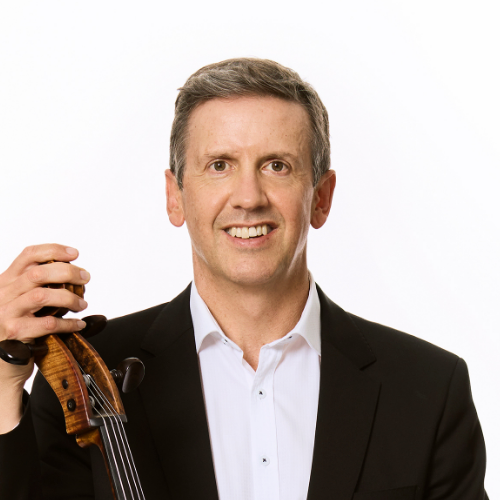
Julian Smiles
CelloJulian Smiles has for over 30 years been a central figure in cello performance and teaching in Australia. On graduating from the Canberra School of Music at the age of nineteen he was appointed principal cellist with the Australian Chamber Orchestra and rapidly gained prominence as a chamber musician in performances for Musica Viva Australia, Kathryn Selby and Friends and at the Huntington Estate Music Festival In 1991 he was invited to join the Australia Ensemble UNSW, and in 1995 formed the Goldner String Quartet with colleagues Dene Olding, Dimity Hall and Irina Morozova. With these two chamber groups he has performed to critical acclaim at major venues and festivals throughout the world, made over 30 CDs on leading labels, and premiered many works by Australian and international composers.
Julian’s appearances at festivals over the years have included artistic collaborations with musicians such as Piers Lane, Tasmin Little, Edgar Meyer, Joseph Tawadros, Alexander Sitkovetsky, Amy Dickson and James Crabb.
Active as a soloist with numerous concerto appearances, Julian has premiered works for solo cello by eminent Australian composers such as Carl Vine, Mark Isaacs and Ross Edwards. He can be heard as the solo cello in the films Mao’s Last Dancer and Mad Max: Fury Road.
As 2024 marked the 30th and final year of the Goldner String Quartet, Julian enjoys continued opportunities to expand his profile as an individual musician. Recently he has performed the solo cello role in premiere performances of two major works by Eric Whitacre with the composer conducting, the solo cello part in Ross Edwards’s Vespers for Mother Earth, and in 2025 performed the incredibly moving and profound Vasks 2nd Cello Concerto, Presence, with the Willoughby Symphony Orchestra.
Having studied with Nelson Cooke and renowned cellist and teacher Janos Starker, Julian has developed a system of cello playing based on thorough and ongoing analysis of musical and technical issues that sees him sought after as a teacher and chamber music coach. He has held teaching positions at the Australian Institute of Music and Canberra School of Music, and is currently Senior Lecturer in Cello and Discipline Lead for Strings at the Sydney Conservatorium of Music.
He has served as a juror for a number of major competitions, including the Melbourne International Chamber Music Competition in 2007, the Gisborne International Music Competition in 2019 and the ABC Young Performers Awards in 2021.
Julian plays on an 1827 Lorenzo Ventapane cello.
“the standout performer here is cello soloist Julian Smiles, whose haunting melodies fly over the choral haze with piercing emotion”
- Harriet Cunningham, Limelight Magazine, 19 September 2022
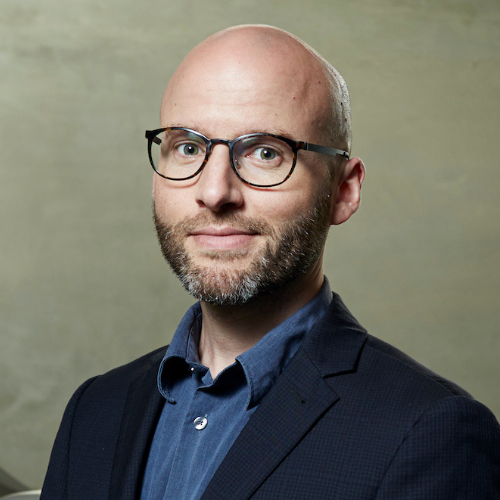
Daniel de Borah
PianoDaniel de Borah is recognised as one of Australia’s foremost musicians, acclaimed for the grace, finesse and imaginative intelligence of his performances. Equally at home as concerto soloist, recitalist and chamber musician, he maintains a wide-ranging performance career across Australia and internationally.
Since his prize-winning success at the 2004 Sydney International Piano Competition, Daniel has performed on four continents and toured extensively throughout the UK and Australia. He has appeared as concerto soloist with the English Chamber Orchestra, London Mozart Players, Royal Philharmonic Orchestra, Australian Chamber Orchestra, and the Sydney, Melbourne, Queensland, Adelaide, Tasmanian and Auckland Symphony Orchestras.
A passionate chamber musician, Daniel has collaborated with many leading artists including Vadim Gluzman, Baiba Skride, Andrew Haveron, Dale Barltrop, Kristian Winther, Natsuko Yoshimoto, Nicolas Altstaedt, Li-Wei Qin, Julian Smiles, Umberto Clerici, Roderick Williams, Steve Davislim and Andrew Goodwin.
Born in Melbourne, Daniel studied at the Liszt Academy of Music in Budapest, the St Petersburg State Conservatory and the Royal Academy of Music in London. He now lives in Brisbane, where he serves as Associate Professor of Piano and Head of Chamber Music at the Queensland Conservatorium Griffith University.

Andrew Barnes
BassoonGrowing up in Sydney, Andrew studied bassoon with Marion Stanley and John Cran while pursuing degrees of Economics and Law at Macquarie University. Upon graduation he accepted a position with chartered accounting firm KPMG Peat Marwick and worked for several years before receiving the Queen Elizabeth II Silver Jubilee Trust Scholarship and moving to Europe to pursue study of the bassoon in a full time capacity. Lessons with William Waterhouse in London and at the Conservatoire de Geneve with Kim Walker and Roger Birnstingle helped Andrew to win the bassoon section of the Swiss International Performance Competition in Riddes. Andrew subsequently completed studies at Indiana University in the United States, receiving a Performer Diploma. He was also awarded the "Performer Certificate", the highest performance prize offered by the School of Music.
Returning to Australia in 1995, Andrew won a position with the Adelaide Symphony Orchestra, where he played full time for 3 years. During this period he was a founding member of the [new] Adelaide Wind Quintet, a finalist in the ABC Young Performers Awards and appeared as soloist with the Adelaide and Tasmanian Symphony Orchestras.
Andrew was appointed to the distinguished faculty of Indiana University School of Music in 1998 where he taught bassoon and coordinated chamber music. He returned to Australia in 2002 to take up the position of Lecturer of Bassoon and Chair of Woodwind at the Sydney Conservatorium of Music. Since that time Andrew has been regular principal bassoon with the Australian Chamber Orchestra, the Australia Ensemble and a founding member of the New Sydney Wind Quintet. He has also performed regularly as principal with the Sydney, Melbourne and Tasmanian Symphony Orchestras and the Queensland Orchestra. Andrew is currently Senior Lecturer of Bassoon and Coordinator of Chamber Music at the Sydney Conservatorium of Music.
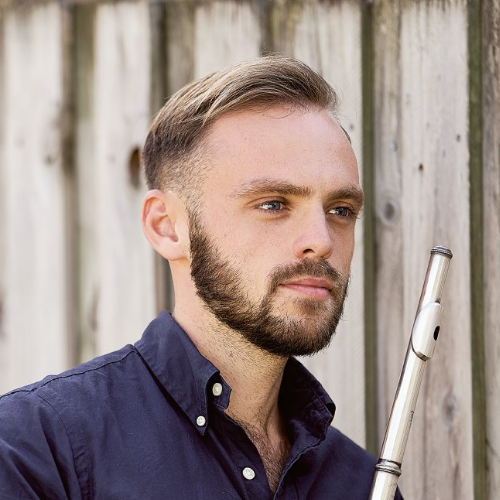
Joshua Batty
FluteJoshua Batty is swiftly becoming recognised as one of the world’s leading flautists, with a career that spans orchestral, solo, chamber music and teaching. Joining the Sydney Symphony Orchestra as Principal Flute in 2019 at the age of 27, Batty had already held the same position with the RTÉ Concert Orchestra in Ireland. For over a decade, he has been invited as guest Principal Flute with more than 30 leading orchestras worldwide, performing with renowned conductors and soloists across Europe, the USA, South America, Asia, Australia, and New Zealand.
A graduate and later Associate of the Royal Academy of Music in London, supported by Sir Elton John, Batty honed his skills under the tutelage of Michael Cox and Jacques Zoon. His early success in competitions at the Royal Academy, British Flute Society, Maxence Larrieu International Flute Competition, and Royal Overseas League established his reputation in the world of classical music.
Having recently left his orchestral role, Batty is now dedicated to a thriving solo and chamber music career. He is particularly committed to expanding the flute repertoire, with upcoming commissions from notable composers like Sir Stephen Hough, Harry Sdraulig, and Nigel Westlake.
Joshua’s solo career has already seen him perform at prestigious venues such as Buckingham Palace, Sydney Opera House, National Concert Hall, Ireland and Bridgewater Hall, UK working with distinguished conductors including John Wilson, Johannes Fritz, and Simone Young to critical acclaim.
As a teacher, Batty began his academic career at the Royal Northern College of Music in the UK and has since held guest teaching positions at the University of Melbourne and ANAM. In addition to his musical pursuits, he has curated a series of charity concerts raising over $50,000 for causes such as the Bushfire Appeal, the Ukraine War, and pandemic-affected artists.
Joshua plays an Arista silver flute with a Nagahara headjoint.