Scientific integrity and the quest for authenticity: with Dr Eric Rubin
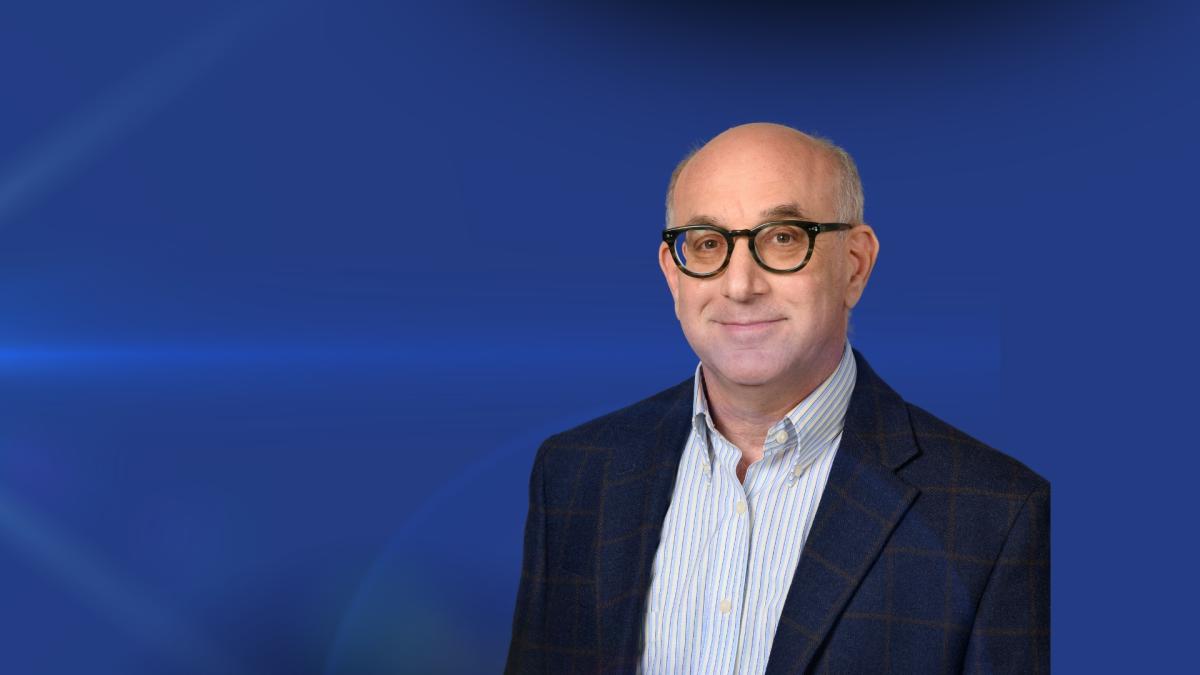
Each article gets scrutinised by many many different people... and we end up changing almost everything... And sometimes we work with the authors to change the conclusions to the opposite of what was originally written.
In today’s scientific landscape, artificial intelligence (AI) is revolutionising research methodologies and scientific writing, reshaping how we conduct and disseminate research. As AI’s presence grows, so do questions surrounding ethics, authenticity and the integrity of scientific publications. While AI brings benefits like efficiency and new ideas, it also brings challenges like bias and fake information.
Now, we wonder: what should, and shouldn’t we publish?
Hear Dr Eric Rubin, Editor-in-Chief of the New England Journal of Medicine, and Professor Nick Fisk, Deputy Vice-Chancellor of Research & Enterprise at UNSW Sydney, as they offer invaluable insights into ethical considerations in AI-integrated research, explain what should not be published considering technological advancements, and pinpoint red flags to steer clear of in scientific literature.
Transcript
UNSW Centre for Ideas: UNSW Centre for Ideas
Sean Emery: Good afternoon colleagues, friends. I'm truly excited to be your host very briefly, at the beginning of the next hour or so. That will largely take the form of a conversation between Nick Fisk and Eric Rubin as our guest from Boston, with substantive roles at Harvard University, at Brigham and Women's, and as editor in chief of the New England Journal of Medicine.
We are going to explore through conversation the important topics of this the pursuit of integrity and authenticity in the medical literature or in research literature, generically and in order to do that, we will be having a facilitated discussion for the first twenty, twenty-five minutes, led by Nick with Eric. For those of you that don't know, my name is Sean Emery.
Upon arrival at the campus this morning, I learned my position title for this week and I am Senior Vice Dean, Research Strategy and Partnerships in the office of the Provost. And I really am absolutely delighted to be hosting this particular event. Can I ask you to join me in acknowledging, to begin with, the traditional owners of the land upon which this meeting is taking place?
We pay our respects to elders past present of the Bidjigal people, of the Eora nation, their unceded lands upon which we gather as employees of this university, guests and friends of the University of New South Wales, Sydney. We, as members of the academic community, have something of a solemn oath, I believe, to issues of integrity. we will all, I think, say that.
But we say it more often than not without really understanding perhaps the entirety of what that integrity requires us to do, how we should behave, the things we should or shouldn't do. We do have a national statement that is the document of authority applicable to research in Australia that does list out some expectations and some trip wires and land mines that we should actively seek to avoid. At the sharp end, the very pointy end of things that breach that set of expectations are a very small number nationally, thankfully, of quite egregious events, to be perfectly frank, where it is highly suspected or is indeed proven that there's been fraud or misrepresentation.
And those things are thankfully few in terms of numbers, but they are nonetheless an important part of what integrity represents. The bigger part, perhaps, of integrity is our responsibilities day to day, to actually make sure that the stuff that we do, in whatever context, as members of the academic community, we go about doing it is reproducible, is legitimate, is aimed at big, ambitious ideas, and that might make a difference upon completion, is properly designed, is properly resourced.
And these are things that are probably not so well attended to in the modern era and that I would certainly invite all of you to acknowledge, at least in your own thinking. We, of course, live in a very dynamic world. Recently we've seen geopolitical issues affect the how and the what we might choose to do around the world through collaborative arrangements in various parts of the world that governments actually then tell us we can't any longer work with, or countries where we can't do the sorts of things that we might wish to do.
And we also live in a world where technology is moving at a pace and at a pace in certain arena, where it's very difficult to second guess the direction and the tempo of change that we might be asked to embrace in the work that we do. And quite specifically, artificial intelligence, to me at least right here, right now, is a truly profound, transformational, an entirely good opportunity to do some incredible things very, very differently.
But equally, it poses a real threat to how we understand and manage our responsibilities in relation to integrity, applicable to research. We rarely, given the profanity of all of that, come together as a community to actually talk about this sort of stuff. And I think maybe we should spend a bit more time as a community outside of niche groups in labs, and almost at the invitation of the institution, rehearsed debate, argue and try and resolve some of the current issues and maybe going forward, some of the future challenges that are going to affect the way we handle research integrity.
So without further ado, again, my great delight to welcome Professor Nick Fisk, our DVCRE, and my welcome as well, on behalf of those all, and thanks upfront to Eric Rubin for joining us for this opportunity and reflecting upon your experiences and expertise as a member of the academic community and in terms of your leadership of a pretty authoritative journal in the general field of medicine and health.
So to you both, thank you very, very much, and I look forward to the conversation. Nick over to you.
Nicholas Fisk: Thank you Sean, ladies and gentlemen. So, Eric Reuben, a great honour to have you here. The editor of the oldest, most prestigious medical journal we have serving us up a diet of high quality clinical science and trials here. We're very proud that, until recently, dean of medicine, now provost, is one of three non-American members on the editorial board of the New England Journal of Medicine.
Eric, you've been in the role for five years. I read somewhere that you were appointed after an international search, and they found you about 100 yards away from their office. And in that five years, I guess, you've weathered all the trials and tribulations of Covid and taken the journal to new heights. I mean, just having a look at this week's issue.
Tempted to have a drink here from this plastic bottle until I read about microplastics seriously being implicated in coronary artery disease. So I think I'm going to avoid that one. And you've also crusaded on a number of fronts, correcting the historical injustices of the journal over the last 200 years and this year. So this week, there's an article on eugenics, and I was surprised to read William Mayo of Mayo Clinic fame; you took him to task for his pro sterilisation, anti-foreigner views. Quite right so too. Okay, so on to the first question of today's topic unreliable research. Scientific fraud has been around, nothing's new. I've been around a long time, but it's now increasing threatened by bad actors with commercial, political, national type agendas, paper mills, citation factories, image manipulation, all made worse by AI.
So how do you ensure integrity at NEJM?
Eric Rubin: So it's a very good question and I have to first say that what we do at NEJM is rather unusual among journals. And that's only because of our resources. We have ten full time MD editors, who are experts in their field. We have another ten part time, expert editors. We have another we have five professors of statistics, and we only publish 200 articles.
So each article gets scrutinised, by many, many different people. And in the end, we end up changing almost everything. Pretty much changes for anyone who has published with us may recall that we change pretty much every sentence of every article, including the conclusions. And sometimes we work with the authors to change the conclusions to the opposite of what was originally, in the submitted manuscript.
So in that setting, it is, I think, a little more challenging for fraud to get through. And I'm sure we're going to talk about examples of fraud getting through. But being really careful about something, I think is, it's part of the battle, and we have the luxury of being able to be very careful.
Nicholas Fisk: So you're bloody good at what you do, and you've got relatively low volume for anyone who's ever tried, it's not impossible, but extremely difficult to get something published in the New England Journal of Medicine. The standards are jut sky high.
Eric Rubin: I mean, for me it's impossible. I've never published there.
Nicholas Fisk: So we tend to think of, you know, research misdemeanours as something at the low end of the market, but it also happens in top journals. In general field we think of superconductivity at the moment in the nature journals with retractions. But there are several scandals in medicine as well. So I wanted to ask you about Lancet and New England Journal, those Surgisphere papers during Covid that we retracted.
Eric Rubin: So just a little background for everybody. Surgisphere was a company that had a proprietary database of clinical interactions with patients from a large number of international sites, allegedly. In fact, that database didn't exist. It was completely fabricated. And we published an early manuscript, the first of the major Surgisphere studies, early on during Covid.
I don't want to make any excuses for that. We were… we missed some important red flags. But I do want to give a little context, and not as an excuse, but to give you an idea of the thought process that goes into something like that. The beginning of Covid was a very unusual time. I was on the wards as an infectious disease attending and, as a consultant to the…
I rounded with the medical teams, and the medical teams would say, how about this patient? Should we give them steroids? Should we give them (IL)-6 inhibitors? and the answer I had to give every time was, ‘I don't know’. Because there were no data to drive decisions. People were being still being treated with hydroxychloroquine, quite commonly, and with other agents that were later to prove to prove to be completely ineffective.
At that time, we all felt like we needed to help clinicians to make decisions. And that data of a quality we wouldn't generally publish, or of a type that we wouldn't generally publish, was it was more important to get it out there than to be our usual selves and demand the randomised clinical trial, with a single end point that was going to make sense.
So we considered manuscripts like this one, which were retrospective clinical experiences, large retrospective clinical experiences. We received three manuscripts, almost simultaneously, addressing the same question. Which was whether or not inhibitors in the renin- angiotensin system and, antihypertensive agents, were safe to use or conceivably improved outcomes in Covid because the receptor… one of the receptors, the co-receptor for the virus was involved in that, in that signalling system.
And it was really unclear. A very large - millions and millions of patients take these drugs every day. Were they going to do better? Were they going to do worse? And these three retrospective variances suggested that these drugs were safe - didn't really suggest it was an advantage or disadvantage, but it seemed to be pretty safe in these experiences.
Again, not the kind of thing we'd ordinarily publish. But each one individually was only modestly believable. But taken together, we thought, if we publish this and this is a decision we make all the time, we're not going to probably hurt patients. So… and we're probably going to help clinicians to make decisions. So we decided to go ahead with the three of them.
And the Surgisphere study was the most problematic of them for some methodological reasons. But it was probably right because the others were there. We published it and there really wasn't much feedback we got. A month later, The Lancet, published - a month or so later - published a another study from the same database that suggested that hydroxychloroquine wasn't helpful in Covid.
Now, at the time, there was a large political movement for in favour of hydroxychloroquine. And so that article got a lot of scrutiny. And when it was scrutinised carefully, it was clear that it couldn't be right. There were too many patients. The database was much larger than it could conceivably be. And there were many internal inconsistencies. When we heard about that in the news, we went back and looked at our study and immediately realised we had the same issues that others had recognised in the second Surgisphere paper. And within the week we'd retracted, we'd retracted the study.
We learn something every time we encounter one of these, we learned… and now we do things a little bit differently. When we look at database, studies. Again, we don't publish very many of them, but when we do, we're much more careful, I think, about what could be problems with those studies.
Nicholas Fisk: So it's interesting. So there's a sort of Covid context wouldn't have happened outside Covid. And there was an urgency at the time with everything we did. Weeks counted.
Eric Rubin: But I do want to say that paper had four reviewers. It had statistical reviews from two different statisticians within our within our own ranks, and was handled by two different full time editors at the Journal, in part because we had to do it quickly. So it was a fast process, but it still had the same… the process was exactly the same.
Nicholas Fisk: So in the context of current US politics, am I allowed to ask you, did you get any studies about using disinfectant?
Eric Rubin: I can't say.
Nicholas Fisk: Okay, that's confidential. So after publication there's a bit of an industry nowadays, sort of a post-hoc detection of falsification, fabrication and plagiarism. You know, around plagiarism software, there's image manipulation software. We've got a whole scrutiny part of the sector with Retraction Watch. We've got Elizabeth Bik. In fact, there's something out of Switzerland where they're paying bounty hunters and you get paid so many hundred dollars - I think it's a thousand - if you find major faults in some papers that are published, intriguing. And retractions are on the rise. But I get the impression real research dis-integrity, at least on national figures here, probably not on the rise. So what do you do with the New England Journal of Medicine when you get a complaint like this about something dodgy?
Eric Rubin: So we look… we take everything seriously. And there I've got to say there a variety. The accusations come in a variety of forms. we occasionally get an anonymous email saying, ‘I know that there were problems with this study’ without any further, description of what the problems were, or there were ethical issues. Depending on how, whether or not it looks like it's something real we will go back to the authors and ask them about it.
When we get a credible concern, then the first thing we do is look back at the article ourselves. But ultimately we go back to authors and we don't have police powers. We don't have any investigative powers. We can only ask them if what… if there is any truth to the allegations. If they say there are none, then we have to consider it ourselves.
Does it make sense or should it be that way? And we can do one of two things at that point. We can we can raise questions ourselves and go to the authors institutions and raise those questions. Or we can dismiss those allegations. But there's an entire sliding scale of how seriously we take things. When we see something that we really are very concerned about we've gone as far as requiring authors to hire outside auditors or outside state statisticians to look.
And they have revealed problems before. I'll give you an example, a study, without anonymising it a little bit, a study, a large study that randomised individuals. And there are concerns raised about by a statistician about randomisation, about table one, the list of all the clinical characteristics and which looked too good.
And in fact, when we actually travelled to the country where the where the where the work was done, not me, but some of the other editors travelled to the country, got an outside statistician to look, investigated some of the clinical trial sites, and, found that people weren't when they were being randomised, they'd come in and say, well, you know, my wife is on this other arm.
I'd like to be on that arm. And the investigator said, ‘Okay, come back tomorrow and you can be on that arm’. And so there really wasn't randomisation. It was poor execution of the study that was a problem. It wasn't exactly deliberate malfeasance, it was just poor trial execution, I think. And we ended up retracting that study and republishing it as a descriptive study without any statistics, because the and the randomisation had fallen apart.
And that gets to what can we do about it? When we find something we can issue a simple we can simply correct something with no notice. We can issue a correction notice. We can issue a statement of concern saying that we're worried about this. Or we can retract. And retractions come in two varieties. The authors all agreed to retract, which is the way that we like to do it.
Or the editors retract over the objections of the authors. So there are a range of punishments. In any case where there's some question of malfeasance we always write a letter to the authors institutions to say this. We're worried that there was malfeasance in this case.
Nicholas Fisk: Interesting. So here at UNSW, like most of the leading universities, we take research integrity very seriously. Actual numbers of cases of malfeasance are very low, but there are lots of preliminary steps. And we publish an annual report - we're the first Australian university to publish a report of all our cases each year. But on occasion, I've had to write to journals saying that we've had an external investigation.
There is, to use your word, malfeasance. And it's a strong recommendation that the paper be retracted because it's inappropriate on the scientific record. It's interesting the number of journal editors that write back and say, ‘Well, we wrote to the person and they said he or she, I didn't do it,’ and that's it. I'm sure that wouldn't happen at the New England Journal of Medicine.
Eric Rubin: I doubt that would happen, but I can imagine circumstances where an institution that's not UNSW who writes to us, and there are some political issues and we're not sure exactly what to do. But generally, under the criteria set by the Committee on Publication Ethics, which is a body formed by various journals, of which we're a member, it's always preferable to have authors retract.
So authors are always offered the opportunity to retract their own work before editors retract. But we would in that… But in 99% of those cases we would ask the authors to retract. And if they didn't, we would retract.
Nicholas Fisk: Okay. Can we change tack a little bit now? So the buzz word at the moment of AI and your journals, right on the front foot with New England Journal of Medicine, I as a as a separate journal. So, you know, the possibilities in discovery are huge. Just think what if we got 20 amino acids in the human body and they're about 500 in nature?
Just what they could do for drug discovery is incredible. What it can do for knowledge with all these synthetic tools that all the different analysis agencies are putting out at the moment. And it's also a boon for scientific writing, particularly for those who don't have English as their native language. But it's a boon for fraudsters as well.
So how does New England Journal of Medicine handle AI in its submissions?
Eric Rubin: So let me tell you the policy first. The policy is it's fine to use AI as a writing tool, but the authors are responsible for the content ultimately. And I think the example that you gave of non-English... for whom English is not a first language you have, instead of hiring a someone for $10,000 to help write your manuscript, if for free, you can ask ChatGPT to translate it.
In the end, though, you have to edit it. You have to make sure that it says what you wanted it to say, and that's fine. And we're not going to change… We're going to change all the words anyway ultimately. So it doesn't really make much difference in the end, but the thinking has to be yours. And that's a kind of fine line I understand.
When it comes to experimental design, when it comes to experimental interpretation, if there's an AI component, it has to be well-described and justified in its use. We do published several manuscripts that use machine learning as part of, generation of we diagnostic, for example. And I'm a basic scientist rather than a clinical researcher.
We use AlphaFold, every day in our microbiology studies. But I think it's important to disclose that. Now the second piece is how do you police that? How do you know that something wasn't generated by AI? And I think we haven't come to grips with that. We haven't seen obvious examples, although we have seen manuscripts that are clearly written by ChatGPT being submitted, but most of them are for minor things.
When we were looking for large RCTs it's a little harder to make up the data using ChatGPT, but making the data look good using AI, that is something that we'd be susceptible to. We do have measures of the data look too good, but anyone clever could make data that looked real more realistic than too good. And it… I think we and everyone else in science is susceptible to that. Right now, I've got to say, I think the benefits of AI outweigh the my concerns about it. But it's going to become more and more problematic.
Nicholas Fisk: I want to ask a sort of poacher versus gamekeeper question around image manipulation. It's all in the news today, following the retraction of Princess Kate's Mother's Day photograph yesterday, which had been manipulated by the royal family.
Eric Rubin: I didn't know that. Yes, I was relying on that.
Nicholas Fisk: And you look at George's hand and anyway…
Eric Rubin: It’s got six fingers. Yeah.
Nicholas Fisk: So we're about to start a pilot of Image Twin here for our PhD student thesis. A bit like, you know you're going through a speed radar trap, so you slow down. You just want to get everything aboveboard. There is a paper just from the University of Sydney not so long ago, showing AI generated images where they've been manipulated are really difficult to pick.
So this is a race between the fraudsters and the legitimate usages. How are we going to play that?
Eric Rubin: It's a great question and a discussion I was having with Sean earlier. I mentioned that in health care in the U.S, the very first major application of AI is in not in health care, but in insurance companies. And it's something called ‘prior approval’. If you want to send your patient to a dermatologist, then oftentimes you'll have to write a justification to the insurance company before the patient sees a dermatologist to get them to agree to pay for it.
That's a huge amount of processing that goes on in there, and there's a huge amount of hands on time for people to make decisions. Well, insurers have decided that AI is a very good way of making those decisions. And of course, the reason it's good for them is because AI can generate a lot of denials, because it's only going to cost them more money for you to see the dermatologist.
Now, the hospitals are starting to institute AI to do the prior approvals. And so now we have AI versus AI. And because they're learning models, they're going to learn to get better and better at writing better applications and denying and denying those better applications. So I think we're going to see this race, in everything that we do of, who can do the better AI, AI on which side. Right now at New England Journal, and again, we're somewhat exceptional with this because we're a clinical trials journal, images are not only the most manipulated images, which are Western blots are not something we publish very often. And so it's a little harder to pull things… most of what we publish are graphs of data, and they're representing data. Anyone could draw them, but they're there are some real data behind them. And the way we do deal with images is we have a medical illustrator who goes through pixel by pixel, looking for discontinuities, if you can believe it - AI is going to help us with that. It's much easier to visualise these discontinuities, and that's the basis for many, almost all, of the fraud allegations that are coming out right now, because it's relatively easy to develop a program to look for them.
I do want to be a little careful, though, because a lot of those things that are found are rather innocent mistakes rather than malfeasance. So I do want to separate those two for one another. A lot of it in the old days when there were films and they were actually cutting the films like we used to do, some of them are misaligned, some of them are just, they are just errors.
But they're clearly wrong, but most of them don't change the results in any way. Ultimately there are two there are two goals. We want science to have integrity. But as a clinical journal, what we care about most is, is the result right? Can it be applied to a patient safely? Can.. will patients benefit from the result? And I don't want to lose sight of that as our goal, as our grand goal because we're obsessed with some details. Not dismissing scientific integrity, violations at all. But that's what we care about.
Nicholas Fisk: Be very interesting to hear the answer to that question in 5 to 10 years time.
Eric Rubin: It'll be it will be completely different. It's. Yeah, it's really interesting.
Nicholas Fisk: Could I take you to authorship? But at the moment, very interesting study recently from NYU, their Abu Dhabi campus, where they created a fictional author and they got them through Google Scholar – an H Index of 19. So they published 19 papers cited 19 times. ChatGPT wrote 19 papers with a lot of self-citations, and they went to a citation cartel.
You pay $300 for 50 citations to your own work. So out of the blue, this non existent individual has an H index of 19. And you think that's a…
Eric Rubin: Do you do you have then the address of that? I mean I could use a little my, my CV could use a little punching up.
Nicholas Fisk: It’s on my laptop which has been pinched.
But do you think that's at the low end but at the high end, you know, the highly cited researcher status, the top 1% of cited papers, and it accounts for 22% of the score in the Shanghai Ranking of Global Universities, it's quite a serious thing. And lots of universities pay lots of money to recruit these people. They've recently clarified, have recently removed maths from the list of 21 subjects because of citation manipulation.
So the top mathematicians were no longer in the top 1%, and a lot of people they’d never heard of all of a sudden were through publishing in non maths type journals on maths subjects. Interesting. So is authorship like that a problem for the New England Journal or you're such high level in their clinical trials it's not.
Eric Rubin: Well authorship is always a problem. And let me give you some real examples.
Again anonymised for confidential reasons, we several times have a question raised about where someone will write to us and said, ‘I should have been an author on that study’, or ‘I'm an author on that study, but I don't agree with the conclusions. I'd like you to take my name off’.
These are different problems. But their authorship has criteria, and the criteria are not totally black and white. But there they are explicit. If you contributed to the study in a way that you should be an author, then you should be an author. Whether you agree with the conclusions or not. And it's hard for us to judge to say, ‘Okay, we'd like to take you can take your name off even though you fulfill the authorship criteria and you should be an author’, because we're trying to enforce those rules.
On the other hand, when someone says, ‘I should have been an author’, we have no... And if the senior author disagrees, we have no way of independently adjudicating that, it gets very, very awkward for us. Again, we don't want to be the enforcer but we have to be, and we have to reach some conclusions.
And again, we go to institutions quite often. The question of guest authorship, I don't think we have… Surgisphere aside, we don't we rarely have completely fabricated manuscripts. But the guest authorship thing is real. It's significant. And particularly in some countries where seniors investigators are given authorship on everything that comes out of an institute.
Problematic. And we have very little way of judging that, though. So we, we leave that in the hands of the authors largely.
Nicholas Fisk: So you can always add, it is possible to add an author post hoc, but in terms of removing an author, if nothing has changed, they have still signed the final manuscript for approval.
Eric Rubin: Yes they did. And when they come to us post hoc it, it's very difficult to decide what to do. We've reached different conclusions in different cases. I think one important factor in everything that we're talking about here is how hands on the process is dealing with questions of malfeasance. Questions of authorship take a disproportionate amount of editors times, and if we decide to make a correction on a 2003 article, which we're doing now, that's going to take the entire staff, from, you know, standing from editors down through the production people many, many hours of time.
In fact, usually these corrections take much more time than dealing with the original manuscripts. And then, you know, from a financial model standpoint, you don't get paid to do that. But it's it is an important part of what we do.
Nicholas Fisk: So teaching as an institution, authorship disputes are not an uncommon problem. And we've got all sorts of paperwork you have to sign. But increasingly it's getting a bit like prenup agreements that, you know, before you even start to collaborate. It's got to be specified who's going to do what and you get blackmailed. I'm only going to do this analysis for you if I can have three of my postdocs on the paper and submit you well versed with all this, I'm sure. Can I just take you to one last topic before we go to the questions?
Eric Rubin: And there are a bunch of questions here.
Nicholas Fisk: Yeah, they're pouring in. So, just open access in it's open access publishing and it's varying colours. And we have our chief librarian here in the audience, this is really gathering pace, you know, between the older subscription and the newer APC models and everything in between. The National Health and Medical Research Council now mandates open licensing of publications they fund and that they need to be freely available from the time of publication. How would that fit with the New England Journal of Medicine?
Eric Rubin: I'm going to put on two different hats here, one, as the editor of a journal where I want people to read what we publish. I love to have everything out there. I want people to read it and use it as not a non-business person, but representing the financial interests of a journal, open access is horrible for us, for a journal like ours, because in order to make to break even as a, as a journal, open access requires you to publish volume.
The amount that we spend per article is far more than we could ever charge authors. It's really, really expensive to produce every single one of our small number of articles. so being an open access journal is not financially viable at all. The folks who benefit from open access from a financial standpoint in publishing, are the large commercial publishers who can either publish huge volumes or have journals within their families that can publish large volumes.
For us, it doesn't work. But that being said, we understand where things are going. I've said my piece on that and we always, virtually always, follow publisher mandates. So, Plan S and which is largely European…and Gates Foundation, we follow all of their mandates and most of which will require immediate publication, either of the version of record or more generally, the author accepted version of the manuscript. And so we always do that.
Nicholas Fisk: Thank you very much. We've got quite a few questions. Here’s an interesting one that, it's got lots of resonance in the US. I can think of several states and papers this would apply to: How do you manage legal risk when retracting a paper over the objections of the authors?
Eric Rubin: We call our lawyer. We do have a lawyer, an in-house lawyer. And, I have to say that the number of legal threats is relatively small, but they're relatively serious, and they're real liability threats for the organisation. I don't think we've lost a case yet. And not sure if we’ve had something go to trial yet.
But we have been subpoenaed quite a quite a bit in cases involving not primarily what we are publishing, but some consequences of what gets published. We've been caught up in company litigation for example. We believe in the freedom to publish what we want to publish what we think should be published. We try to.. we stand by it and we try to maintain our confidentiality in the threat against the threat of subpoenas.
And we've largely been successful in that. I'll tell you, though, that, we've been threatened with a lawsuit here from Australia, and libel laws in Australia are much more severe than libel laws in the US. And so we're not going to win them all.
Nicholas Fisk: So I read somewhere there's, a philanthropist in Silicon Valley who's put $1 million into a fund to fund the legal risks to, retraction type whistle-blowers. I think it came about because of the abortifacient papers in the US that were, retracted recently. That's really interesting. A good one here. How can AI take part in a research review, a peer review?
Eric Rubin: So I it's a great question and I think it is going to be extremely helpful in research and reviewing. For you as a reviewer, you get a manuscript, if you could just ask ChatGPT, for example, or any AI what's known in this field? And just get a very quick look at what's known. And I know you're supposed to be an expert, but have you read the 2024 literature on this topic?
Maybe not. And so that would be really helpful for us as editors trying to figure out who the experts are in the area could be very, very helpful. The problem is confidentiality. Right now, we will not allow our viewers to use it to submit a manuscript to ChatGPT, because that manuscript could become part of what ChatGPT knows.
And even though it it's entered into the giant database, we have very, very strict rules on confidentiality. So we haven't really taken advantage of it. I know that the BMJ is working on a sandboxed AI that reviewers and editors will be able to use, and I hope we get there someday. Because I think these could be useful tools.
The key thing, though, is we're asking… when we ask reviewers for their opinion, we're asking the reviewer. We're not asking them how good they are using AI. We're asking them an opinion and we want their opinion. So we don't want a review written by ChatGPT, but I think it's very useful to have it as an aid.
Nicholas Fisk: Any questions from the audience?
Audience 1: My name's Allison Ohno, and I'm actually here from the University of Aberdeen. So, just happened to be in Sydney this week. So I'm really interested to..
Eric Rubin: You know, I just happened to be in Sydney, too. That's perfect.
Audience 1: I just wanted to ask you first of all about checklists for integrity issues, because increasingly there are a variety of short and long checklists which people can use to draw upon when they're looking at articles, which really ask different questions from the kinds of things that we as peer reviewers usually think about when we peer review a paper. And I wondered if you had ever considered using any of those to help guide your peer reviewers.
Eric Rubin: What was the tool that you were talking about?
Audience 1: Well, there’s about four - this one in development in the UK, but, there's one called Trust SR, which is basically specifically designed by one Cochrane Group to look at trustworthiness in randomised controlled trials. We have one that was published in Nature called Reappraised. But that's more for biomedical research. So it's just quite often people just don't think of the issues. Like for Surgisphere, the question would be really, do these people have the expertise to have done this? Simple things that just get missed.
Eric Rubin: Yeah. No. Okay. I think, you know, and I think that that goes to the question about AI. S
Should we be using external tools to help us make decisions as editors and to help reviewers, with the work that they're doing largely for free, as a contribution to community? And I think that anything that could make it easier is better.
We're not using those tools as editors right now. Our reviewers might be. But again, as long as we don't have to disclose information that's confidential about the manuscript itself. I think there are great opportunities to use things. I do want to get to the point where we can use that confidential information - where we can ask is table one right? Can could it .. is it conceivable that table one could be correct based on modelling? Which is how one of our older trials got caught, with, with having a problem. I will say specifically about the table one issue, we had our fellows review every table one for a few years following the one issue that we found. Never found anything.
So any given problem is rare. But that being said, perhaps in the in the world of AI, they're going to become more common and we're going to see more patterns. but I think I would I would love to have more help.
Nicholas Fisk: What are your thoughts on publishing articles as versions of record as eLife has pioneered, compared to the traditional model of accept and reject?
Eric Rubin: I love the fact that there are a lot of experiments out there and our lab has published in eLife quite a bit. We've stopped publishing in eLife because actually, I think that model doesn't work well for the science that we want to do. We would like to have, although we would like to have a separation between a preprint, which we submit to preprint servers all the time, and the final version of record, more of a distinction that's reviewed and people can have some faith in it if they're not going to delve into the details themselves. Remember, though, that clinical medicine is very different from basic science, the basic science that eLife publishes. And I worry about having multiple versions or pre reviewed material out there that has some imprimatur of being real.
What's really different for us - when I publish a paper, I work on tuberculosis. First off, you know, there are only six people who read it. And they're all TB experts, right? And they're going to look at it and say, that's real or that's rubbish. And secondly, if what I publish is wrong, no one dies. But in the New England Journal, when we publish the results of a trial, people are going to act on it the next day.
We know that. And the people who read our journal include medical researchers, like many of you out here, but also include clinicians who don't have the tools to evaluate the research in the same way that a medical researcher could. And so they're kind of relying on us to get it right - to make sure the message is right.
And we feel that responsibility every day. So where I can publish something speculative out of the lab and say, ‘We think this means that’ we don't allow much speculation, we have a really boring journal that says ‘This met its outcome or didn't meet its outcome’. and we work hard to make sure that we present material clearly and in a way that a clinician can use. Having multiple versions out there, especially… is kind of corrosive to that, particularly because authors, not just industry authors, certainly industry authors primarily, but also academic authors, they believe in their message or they have a financial incentive to have success in trials.
And it's our job to make sure that that message is tempered in a way that's going to be not harmful to patients.
Nicholas Fisk: Okay, I've got one more here then. can you talk a your journal being boring - this perhaps pursues this a bit. Are there ever decisions made regarding papers because it would bring disrepute upon the journal, rather than the value of the paper itself?
Eric Rubin: I'm thinking about that one.
Nicholas Fisk: You're under oath.
Eric Rubin: You know, I don't think I'd separate reputation from quality. Our reputation, to the extent that we have one, is that we publish high quality information. Something that doesn't meet those quality standards is always going to bring disrepute on our journal. So I think that those two things are fairly well aligned. But let me give you an example.
And it's a it's a hypothetical example thinking through this. What if we had a study that said, and there was well done, that said ‘Measles vaccine doesn't work as well as people think it does’. When we published that? I don't think it really has to do with our reputation as a journal, but would that have a clinical impact?
Not sure. Would it make the vaccine hesitant… Would it reinforce a vaccine hesitancy community? Probably. I think that we do a lot of weighing there to say ‘This is clinically directive or not’, versus ‘This is a bad public health message or not’. Another example, ‘Tobacco isn't as bad as people think it is’. Would we want to publish a study that said that?
Probably not. I mean, tobacco is still bad, even if it's not as bad as someone had once said. And again, these are hypothetical examples, but I haven't seen that paper. So I think we're really concerned about the impact on the medical community, on patients, really on patients ultimately. And that drives our decisions. I know this sounds very high and mighty and theoretical.
This is part of our discussion every week in our editorial meeting. It's a really an integral part of a decision on every manuscript is ‘Will patients benefit if we publish this?’
Audience 2: Hi. Thank you. Nichola Smith from the Department of Pharmacology here. You talk about the dialog that you have as an editor and as a journal with the institutions where there has been an accusation of misconduct. I'd like you to tell us a bit more about that tension between the Journal and your need to set the record right, versus the legal requirements for protecting people who are under investigation.
And also the reputational kind of responsibilities that the universities might feel they have in keeping that information quiet. When do you put out that editorial notice of concern? There was a lot of stuff in there. Sorry.
Eric Rubin: No, I get it. it's a it's a it's a really good question. And I have to say that the number of cases that I've had to deal with since I've been in the almost five years since I became editor, you know, it's a handful, maybe four. So I don't want to give the idea that I'm speaking from a huge amount of experience.
One of the problems with accusations of this nature are its confidentiality. Our process we keep confidential. We let articles speak for themselves, but we don't talk about what changes were made in that. What the reviewers said, none of that is public, and we never make that public. And we don't discuss that publicly. In the case of Surgisphere, I'm slightly more public about it, but I'm not going to talk about what reviewers said or, for example.
And that's because the end product is public. When there's an accusation, we go to the institution. We don't tell the institution what our process is, the institution. And I'm going to call out Nick here, doesn't tell us what their process is either. And in fact, they don't even tell us the disposition of something if it well, at all, unless it becomes public, we will never know.
We have the journal and its confidentiality requirements in the institution. It's confidentiality requirements. And the best we can do is say ‘Someone raised this allegation and we believe that it's true’. We will happily say why we believe it's true, but that's about it. Generally, we're not asked - the institution takes it on themselves and we don't hear about it.
In the case of a retraction where there is something very public, then everyone knows what our what happened on our end and, it's up to the institution to decide what sort of disciplinary measures are occurring in, in the case, in a case where we're asking for an investigation because we don't know what to do with an article, generally institutions are more responsive with that when it comes to authorship, for example, that's less of a problem. But when it comes to malfeasance, if we need the institution to weigh in, then we're probably at the point of retraction. Honestly.
Nicholas Fisk: I think I've got time for one more question, and someone has put their name to this one. So, I'm going to ask a question from Fiona Bradley in our library. She's one of the most senior leaders in the library and she asks ‘If any JM adds so much to each article. have you explored working with subscribers and libraries on alternative, sustainable, open access business models?
Eric Rubin: I don't know how big a cheque book you have. An article for us costs something on the order of $50,000 per article. It's hard to imagine a - and remember that we don't charge authors ,we don't charge anybody. Anyone can submit. It's all free. It's hard to imagine a system that could generate that much money. If you think about the blowback on authors publication charges, there was a well-known, well described, dispute between the editor, the academic editors, and a journal – it was a neuroimaging neuroscience imaging journal, I believe, where the editors quit en masse because of a publication charge of $800.
We're not in that variety. Even Nature gets a lot of pushback on their $10,000 ish publication charge, and $10,000 wouldn't even come close for us. So I would welcome creative approaches that allowed more people to read our journal.
The truth is, and this is very specific to our journal, and it doesn't help the access to journals in general. Pretty much every medical school, most hospitals subscribe, many public libraries subscribe. So it's not that hard. And all institutions have institutional subscription - all major medical institutions. It's not that hard to read our stuff. We also make it available for free in the 70 poorest countries in the world.
So even in countries that can't afford it, it's available. So the truth is, most people who want to read it or need to read it can. But we're fortunate in that it's not true for every journal. And, it is a problem and I don't deny it. Somewhat less of a problem for us. but if someone has a magic solution that will allow us to not have to worry about money, I would love that, because, those are the very worst conversations I have back home.
Nicholas Fisk: So we were discussing earlier the potentially magic solution model from the Australian government and our chief scientist, but I don't think we have time to go down that route now with only one minute left. So, this has been fantastic. It's been very illuminative. We've covered a lot of ground. what can I say? It sounds like your job is a hell of a lot of fun, but really hard work. Ladies and gentlemen, could you join me in thanking Doctor Eric Rubin.
UNSW Centre for Ideas: Thanks for listening. For more information, visit unswcentreforideas.com. And don't forget to subscribe wherever you get your podcasts.
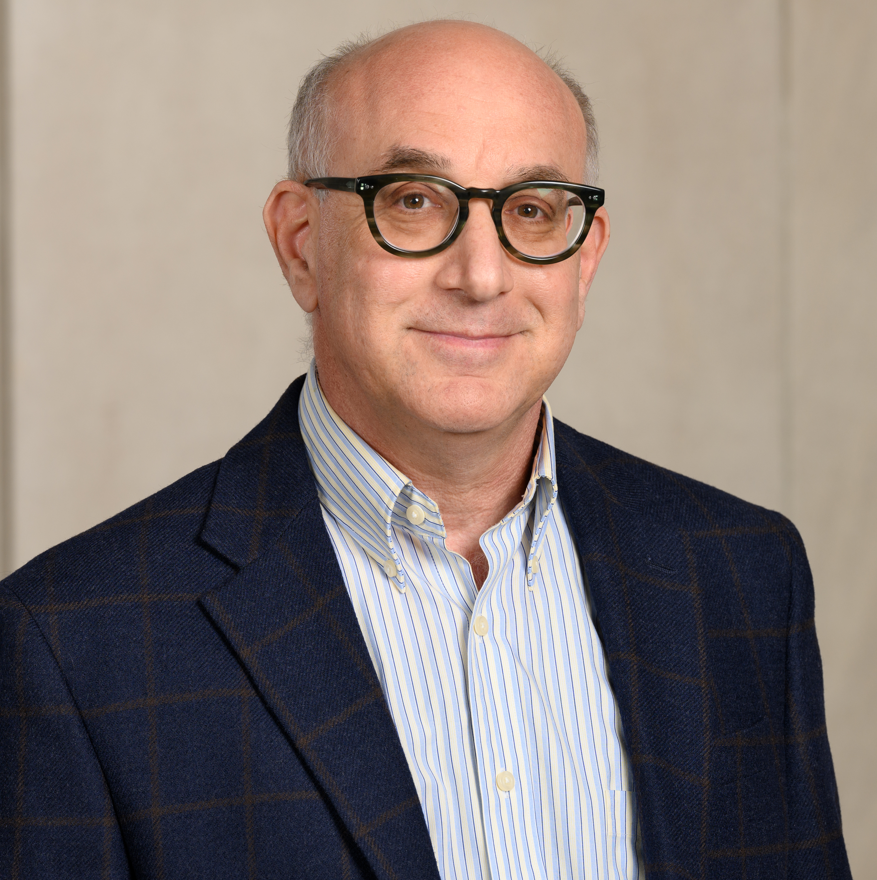
Dr Eric Rubin
Editor-in-Chief, New England Journal of Medicine, NEGM GroupEric Rubin is Editor-in-Chief of the New England Journal of Medicine. He earned an AB degree from Harvard College and MD and PhD degrees from Tufts University, did clinical training at the Massachusetts General Hospital and postdoctoral work at Harvard Medical School. He is an Adjunct Professor at the Harvard TH Chan School of Public Health where his lab studies tuberculosis. Eric also practices infectious disease at the Brigham and Women’s Hospital and is a Professor of Medicine at Harvard Medical School. He is a member of the American Academy of Microbiology, the American Association of Physicians and the National Academy of Medicine.

Nicholas Fisk
Professor Nicholas Fisk is the Deputy Vice-Chancellor (Research) at UNSW Sydney. His research is in the fields of developmental biology and maternal-fetal medicine, and he is the author of more than 400 publications. He has served in leadership roles in a number of international and national organisations, including as Chair of the Scientific Advisory Committee of the Royal College of Obstetricians and Gynaecologists. He joined UNSW from the University of Queensland, where he was Executive Dean of the Faculty of Medicine and Biomedical Sciences and the inaugural Director of the University of Queensland's $70 million Centre for Clinical Research. He was elected to Fellowship of the Academy of Health and Medical Sciences in 2014.